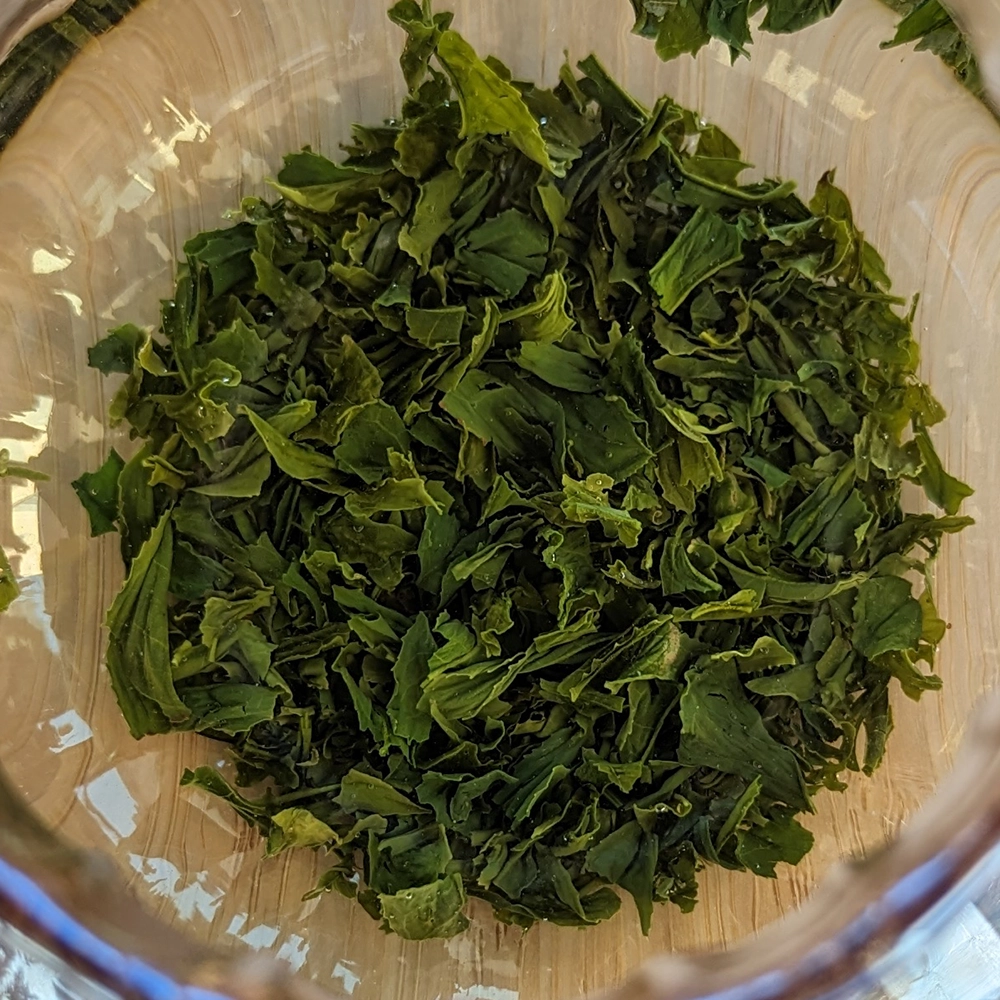
 | Green tea in the cupGreen tea is the same plant as a black tea, heated early. The leaf keeps its catechins, and the water should not boil. Green tea, the leaf that does not oxidiseIt comes from Camellia sinensis, the same plant as a black tea. The leaf is heated early, before the air can darken it, and the cup stays pale and vegetal. Most of the crop grows in Asia, and it is drunk in China, Korea and Japan. In Japan it meets steam, and the cup keeps more green. In China it is heated in a vat, and the cup is a little more toasted. Catechins in the leafBecause oxidation stops early, the leaf keeps its catechins. The largest share is EGCG, with EGC, ECG and EC beside it. There is L-theanine, uncommon in other foods, and caffeine that changes from garden to garden. Catechins are polyphenols, the family people mean when they call the leaf antioxidant. Theanine is often felt as a calm alertness, unlike coffee. A bancha is gentler. At night, a herbal tisane leaves the stimulant out. Measure and cautionsAbout 2.5 g for 200 ml, at 70–80 °C, for two to three minutes, cup covered. A very fine steamed leaf sometimes wants water nearer 60 °C. A boil turns harsh. The guide to water and time keeps that cup from scalding. Three to five cups of green tea a day is a common habit. Ten is already a lot of caffeine. A capsule is not this cup: the dose is another thing, and high doses have been linked to trouble in the stomach and the liver. With a meal it can reduce the iron the body takes up. Vitamin C on the same plate is the usual offset for iron from plants. If you are short of iron, pregnant or nursing, speak to the clinician who follows you. The same applies with warfarin, another blood thinner or a stimulant, or if you follow blood sugar, high blood pressure or pressure in the eye. Abdominal pain, yellow skin or very dark urine call for a doctor. Milk covers the perfume. The shop's Earl Grey green tea, an organic sencha, shows best without it. |