
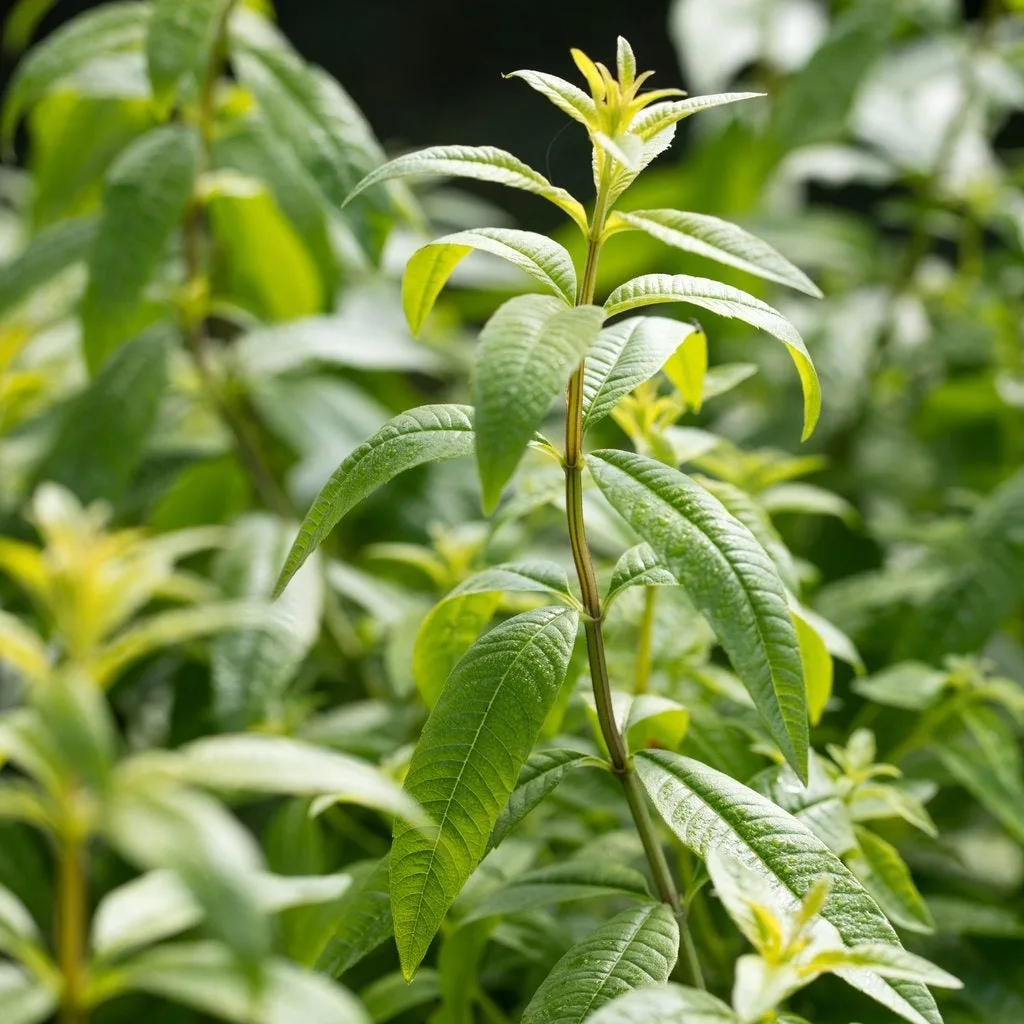
 | Lemon verbena in the cupLemon verbena: the caffeine-free leaf, traditional use, and the shop's herbal tisane. Lemon verbena, the leafLemon verbena is the leaf of Aloysia citrodora, a shrub from South America. It is not lemon balm, and it is not the Camellia leaf. The cup has no caffeine. The citrus smell comes from oils such as citral. The leaf also holds verbascoside, a polyphenol, and flavonoids. A MyHealthopedia guide from February 2026 describes the infusion. It lists about twenty effects, unwanted effects and a recipe. The list runs from digestion and sleep to skin, weight and the liver. Not everything that guide states is in the European monograph on the leaf. Traditional useIn 2021 the European Medicines Agency published a traditional-use monograph on this leaf. It did not accept a well-established use: trials that would show a clinical effect of the infusion are missing. What it recorded is the old habit, in two indications. One is relief of mild symptoms of stress, and an aid to sleep. The other is mild digestive complaints, such as bloating and gas. Herbal tisane, not an extractTrials that measure muscle use a concentrated extract, about 400 mg a day, for close to two weeks. That is not a cup. In a study of 44 adults, strength fell less after hard exercise in the extract group than with placebo. Creatine kinase and interleukin-6 did not separate the groups. In another trial, with 60 adults and a different extract, creatine kinase and muscle pain were lower. Strength recovery was left open. A herbal tisane from the shop does not copy that dose. In the cup, and who should askThe shop infusion follows the usual measure: about 2.5 g for 200 ml of boiling water, five to eight minutes, cup covered. The guide suggests one to two teaspoons of dried leaf, or four to five fresh leaves, for five to ten minutes. For healthy adults it speaks of one to three cups a day. Past that is where it points to an upset stomach. The monograph advises against the leaf in pregnancy and while nursing, for lack of data. Use in children is not established either. Anyone sensitive to plants in the Verbenaceae family should leave it. It can make you drowsy. If it does, do not drive. The risk rises with alcohol or with a sedative. Headache or dizziness show up in the guide as uncommon effects. The guide also mentions the kidneys and the liver at high doses. The European assessment did not keep a kidney warning for the infusion at the monograph doses. If symptoms worsen, speak to the clinician who follows you. You can purchase Lemon verbena in our shop here: Champs de Provence opens with lemon verbena, and adds fennel, sage, rosemary, thyme and lavender. No caffeine. Lemon and mint takes the same leaf with mint, and is drunk hot or cold. Both sit with the herbal teas. At night, the note on a herbal tisane explains the difference from tea. Sources- European Medicines Agency, monograph on lemon verbena leaf (EMA/HMPC/376770/2019), 2021. |